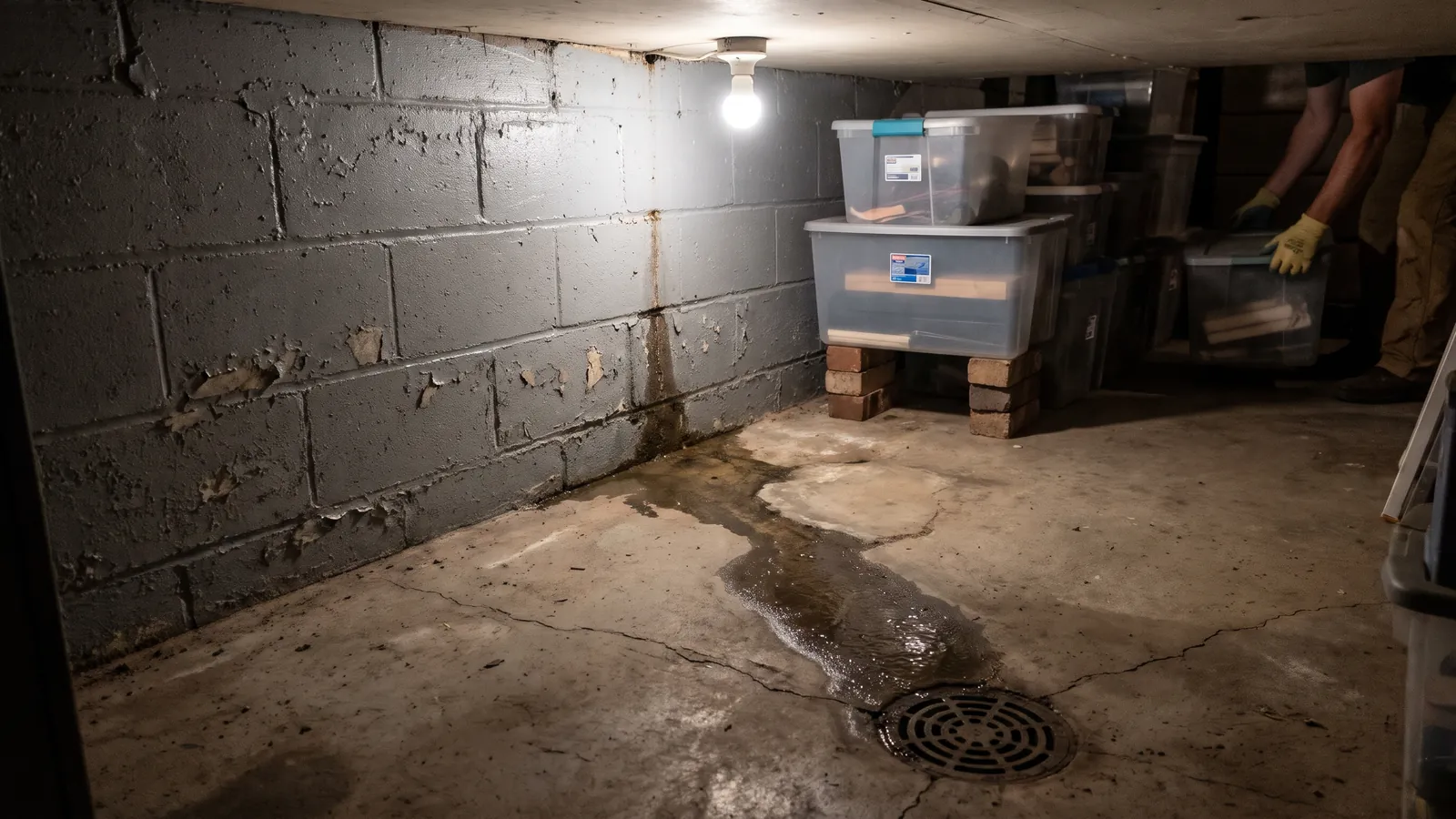
The usual entry points
When we trace a leak, these are the places we check, roughly in order of how often they turn out to be the culprit:
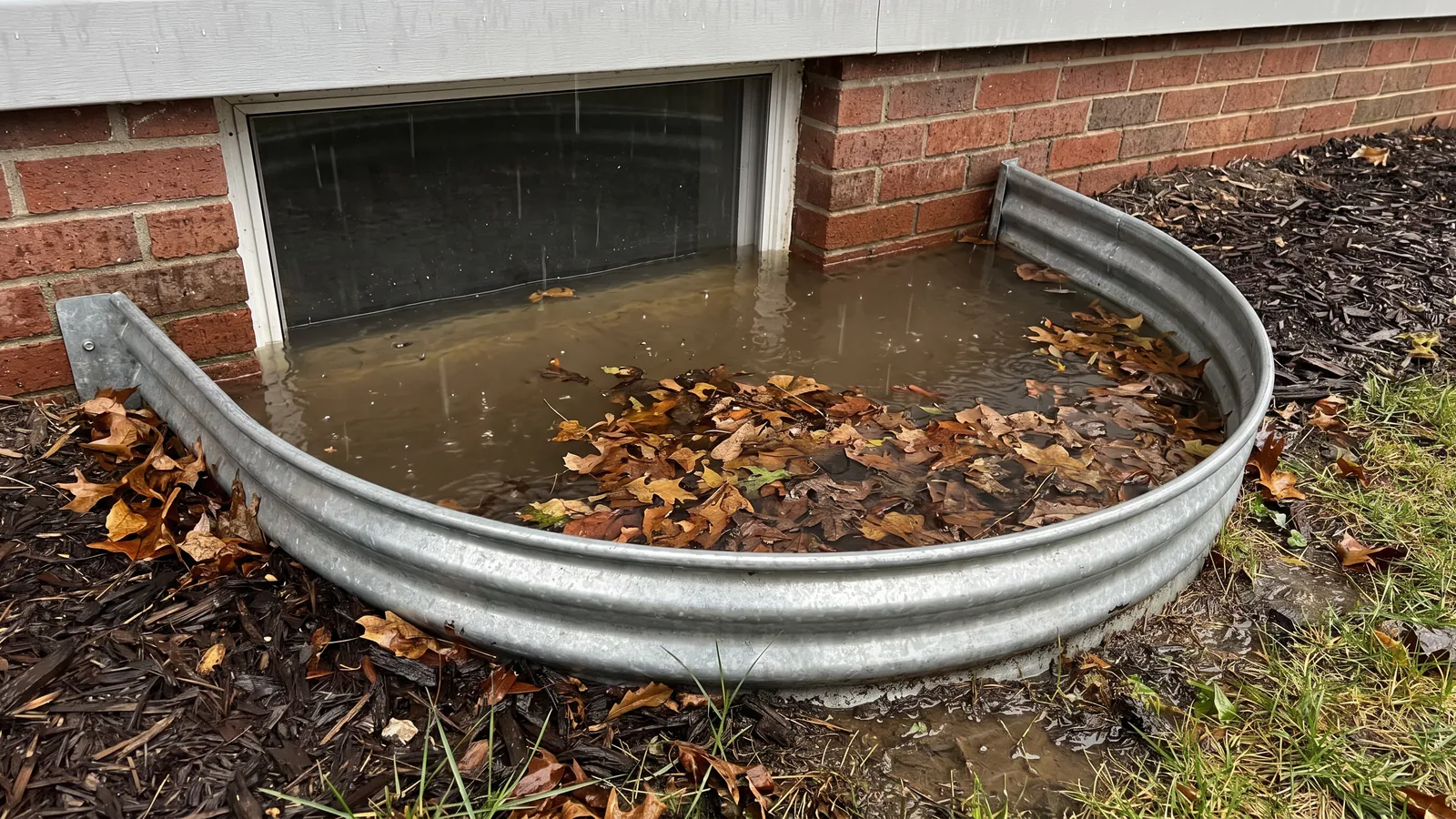
- Window wells with no drain, or with a drain clogged by leaves, that fill up and spill through the window frame.
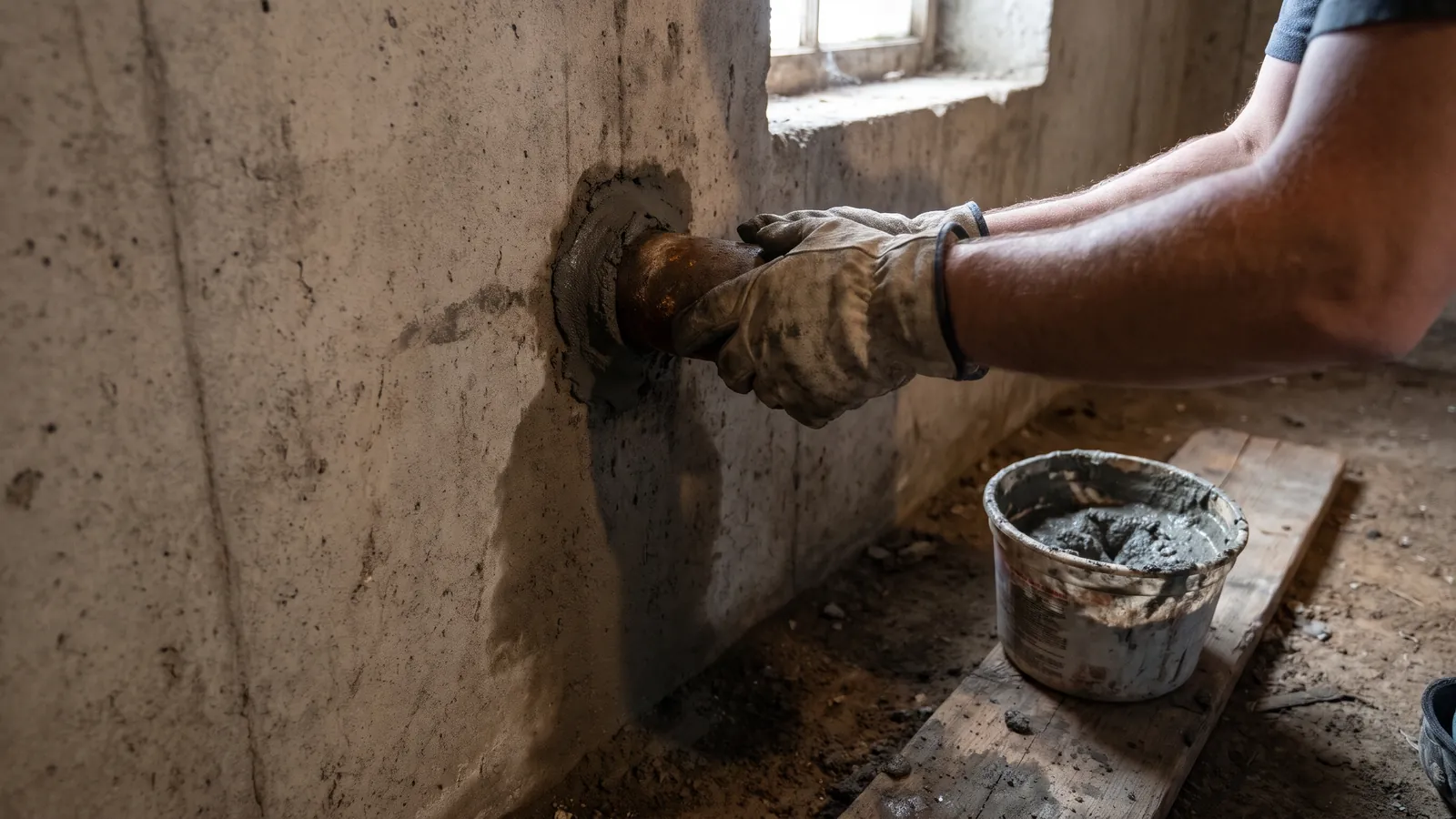
- Pipe and wire holes where the water line, sewer line or old fuel line passes through the wall.
- Cracks in poured walls, and open mortar joints in block or stone walls.
- The cove joint, the seam where the wall meets the floor, which leaks when water builds up under pressure around the footing.
- Above-grade sources: a leaking hose bib, a door threshold, or gutters dumping onto a basement stairwell.
Matching the fix to the source
A clogged window well needs a drain and a cover. A pipe hole needs to be packed and sealed. A poured-wall crack gets injected. A leak all along the cove joint is the sign that water is collecting at the footing, which is where an interior drain comes in. We will tell you which one you have and price only that.
Questions we hear about basement leak repair
Why does my basement leak only in some storms?
Long soaking rains saturate the clay and build pressure; short downpours mostly overwhelm gutters and window wells. The pattern points to the source.
Is a little water normal in an old basement?
Many older St. Louis basements see some dampness, but water on the floor is not something you have to live with. Most leaks have a clear source.
Can you fix a leak in a finished basement?
Often, yes. Exterior fixes and pipe-hole seals avoid tearing out finishes; we will say up front if any wall covering has to come off.