Where helical piers make sense
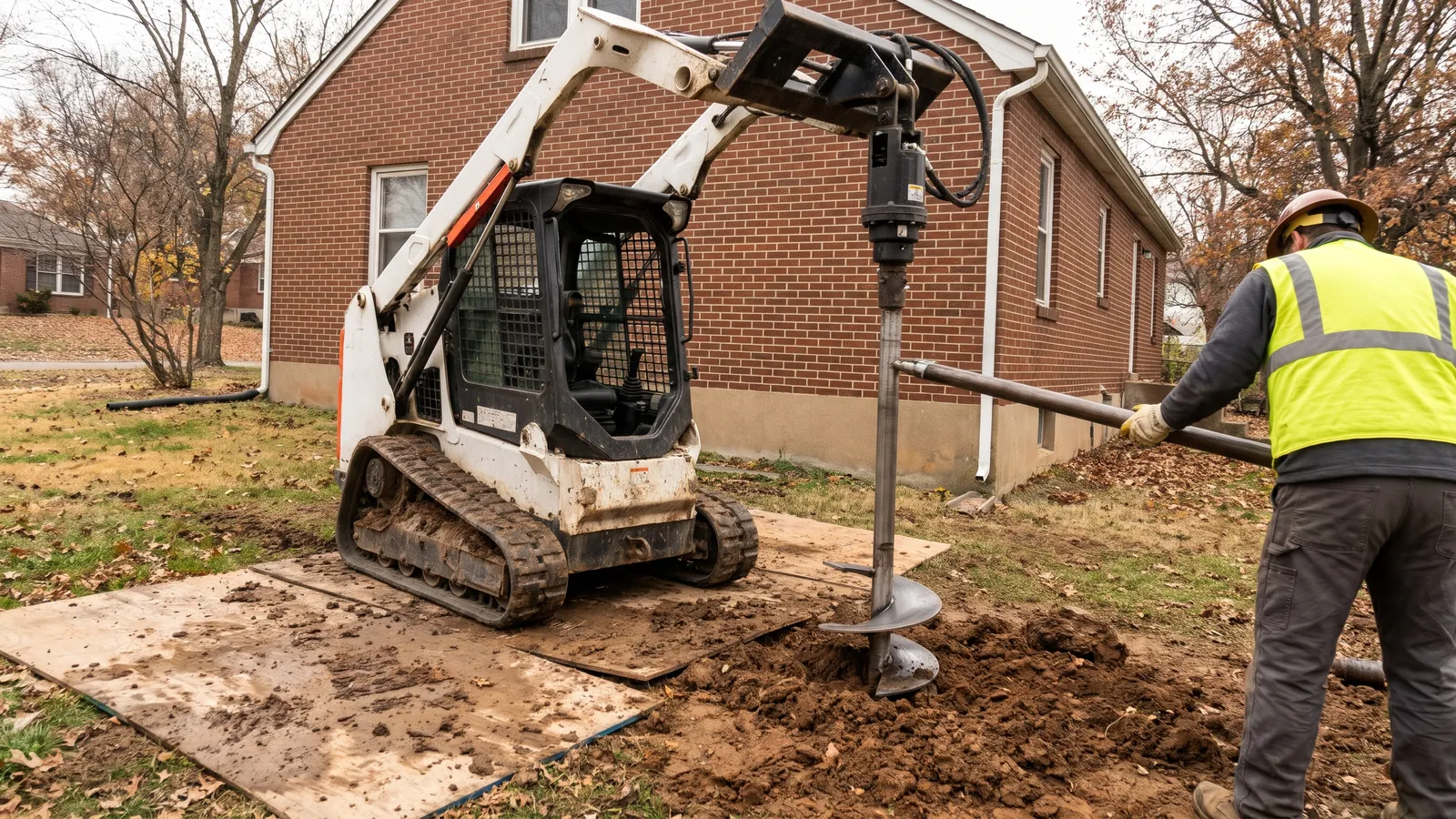
Helical piers do not need the weight of the house to drive them, so they suit jobs where there is not much weight to push against:
- Front porches and stoops that have pulled away from the house
- Room additions and sunrooms built on shallow footings
- One-story frame houses and garages
- New footings, decks and steel beams that need support before they are built
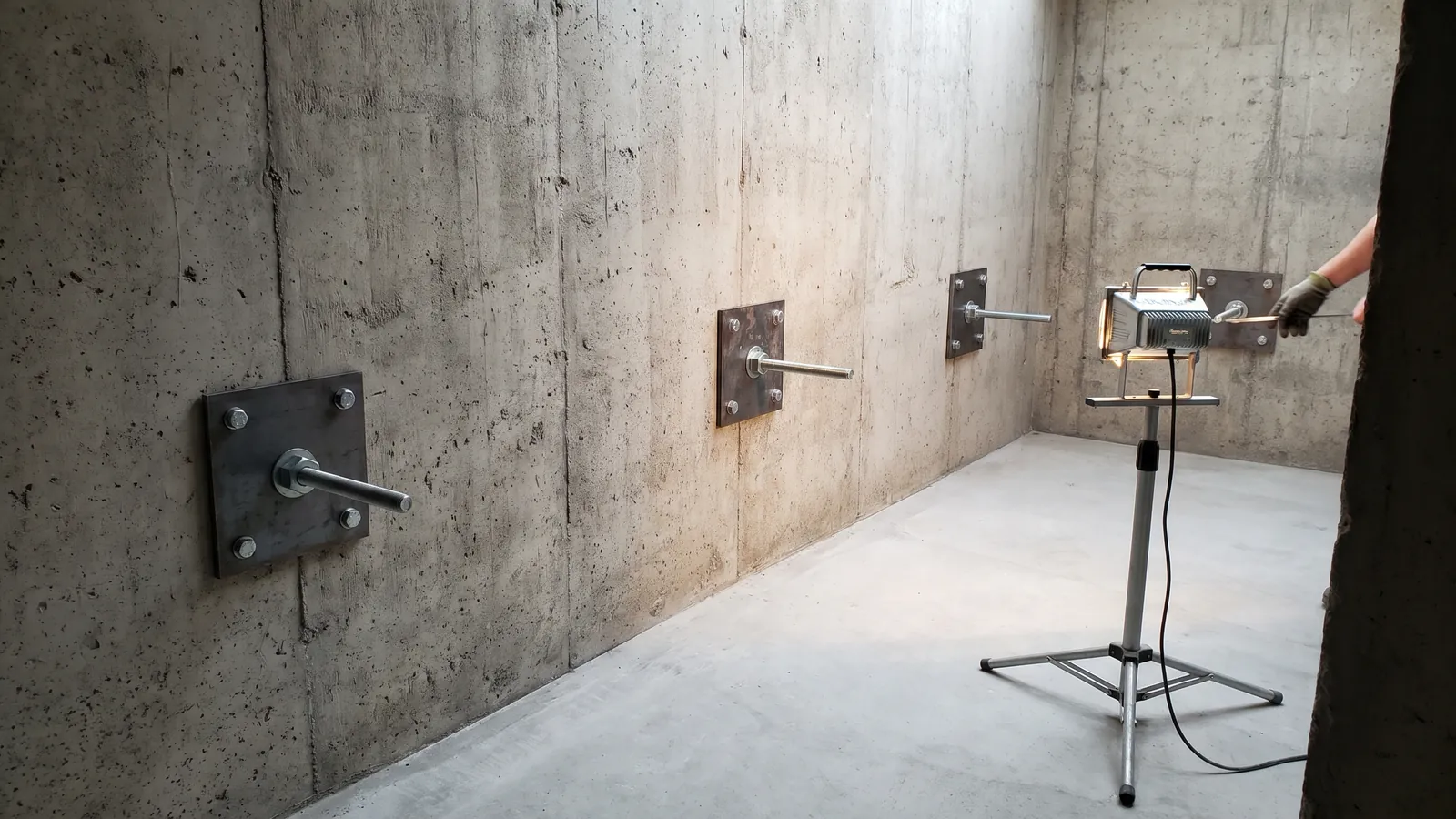
- Walls that need a tieback anchor screwed out into the soil behind them
How the install reads the ground
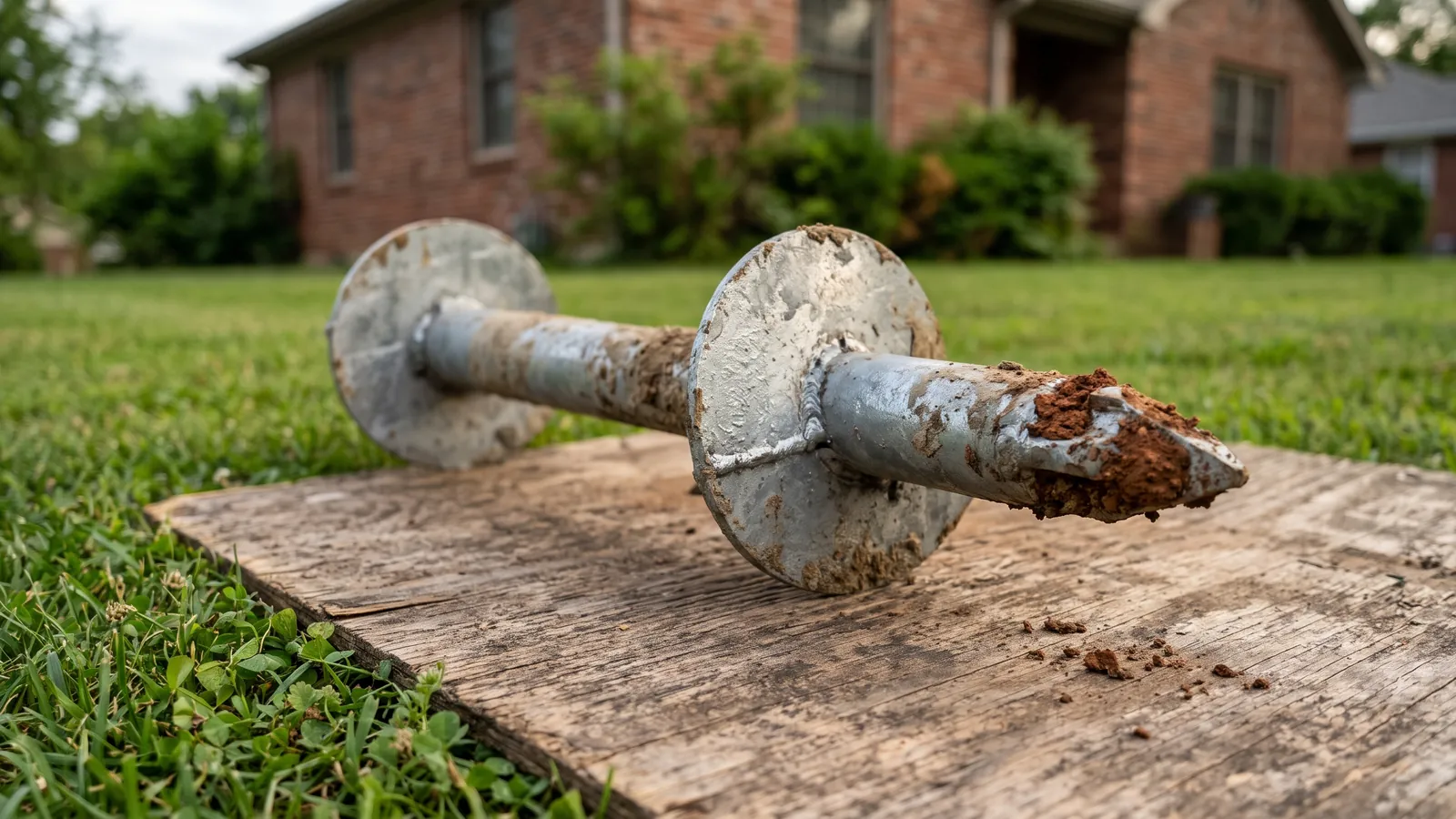
As the shaft turns, the machine's drive head shows how hard it is working. That turning force rises as the helix plates bite into stiffer soil, and it is the reading crews use to decide when a pier is deep enough. We log the depth and the final reading for every pier, so the record is part of your file rather than a guess.
| Point | Helical pier | Push pier |
|---|---|---|
| Driven by | Turning (hydraulic drive head) | The house's own weight and a ram |
| Best on | Lighter loads, porches, additions, new work | Heavy brick and block walls |
| Checked by | Installation torque | Driving pressure |
| Access needed | Room for a small machine or hand-held driver | A hole at each pier spot |
In St. Louis soils
The clay near the surface is the problem layer, so the plates have to get through it. Depth varies a lot from street to street; some piers reach good soil in a few feet more than expected, others need extension sections. The written price explains how extra depth is charged before the job starts.
Questions we hear about helical piers
Are helical piers better than push piers?
Neither is better everywhere. Light structures and new work usually point to helical piers; heavy masonry walls usually point to push piers. The inspection decides.
Can helical piers go in from inside a basement?
Yes, with hand-held drivers, when the outside is blocked by a driveway, a neighbor's wall or a slope.
Do they need a permit?
Underpinning a house is structural work, so yes. We pull it from the city or county office that covers the address.