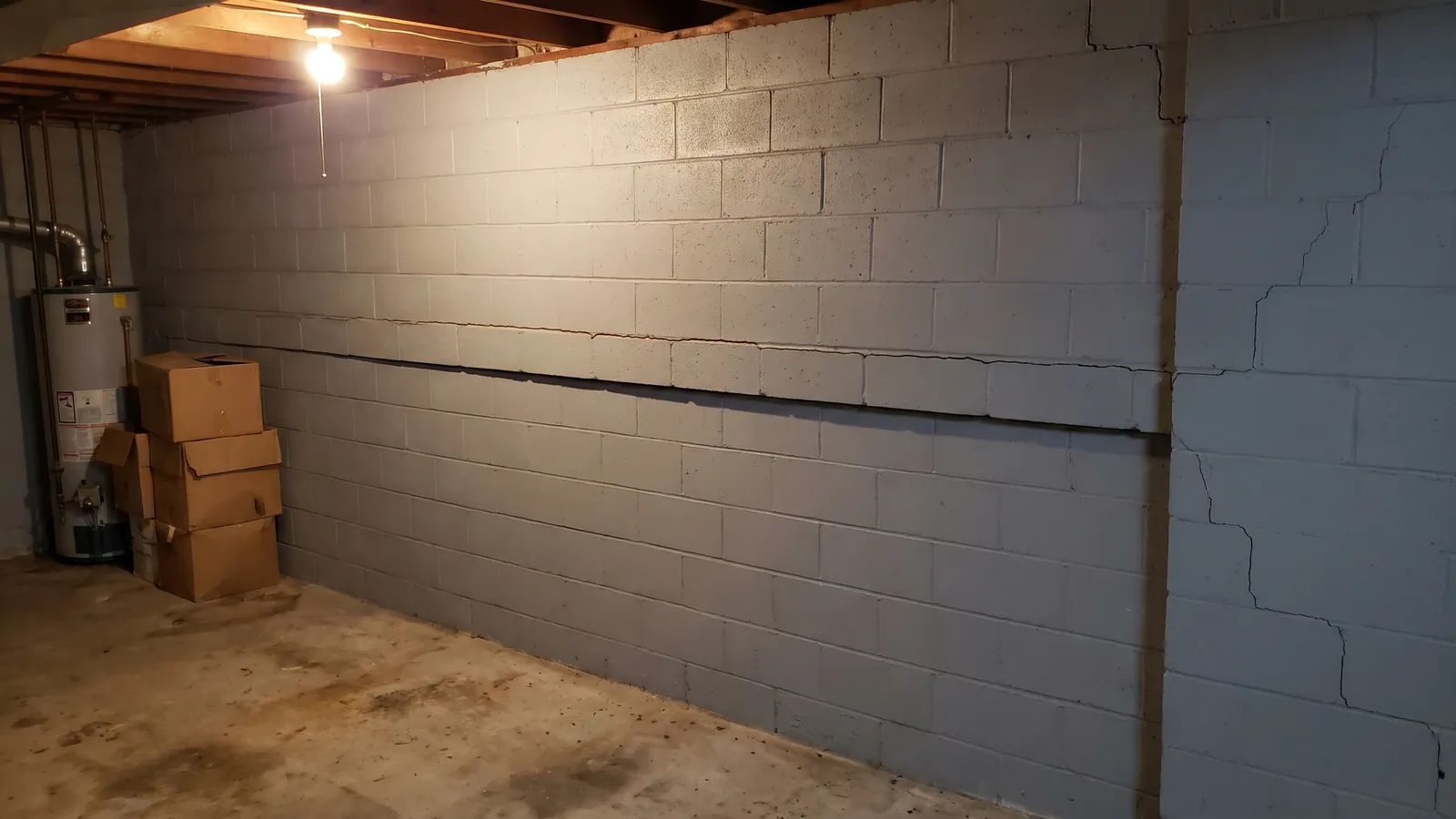
Why walls bow here
Clay soaks up water and expands sideways as well as up. After a wet spring the backfill against a basement wall can press hard on it; in winter, water in that soil can freeze near the top and add more push. Block walls show it first as a horizontal crack in the mortar about halfway up, then as blocks stepping in. Poured walls tend to crack diagonally from the corners.
Three ways to hold the wall
| Method | How it works | Used when |
|---|---|---|
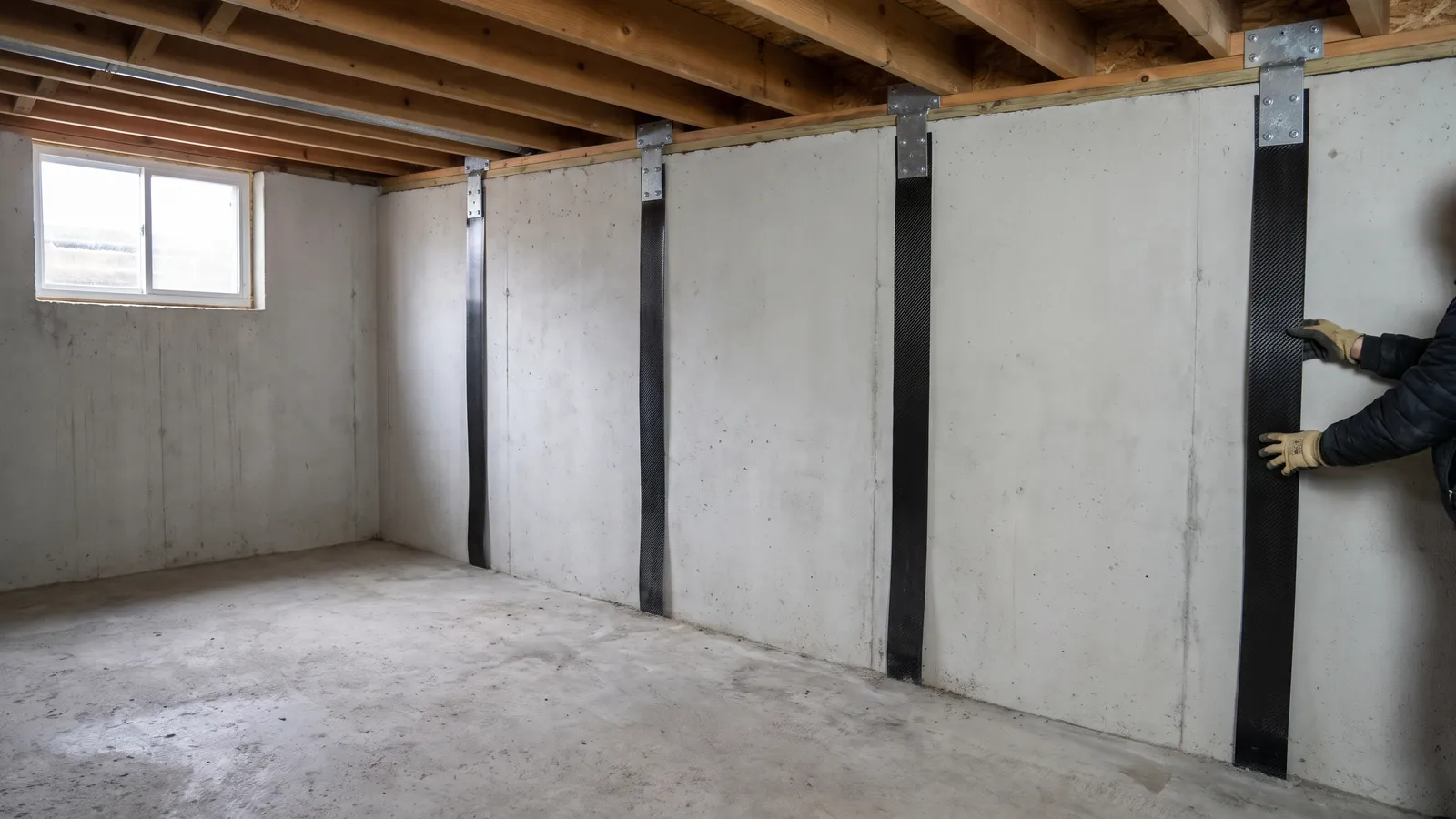
| Carbon fiber straps | Bonded to the wall face and tied to the floor and the joists above | The wall has moved in only a little and has no shear at the bottom |
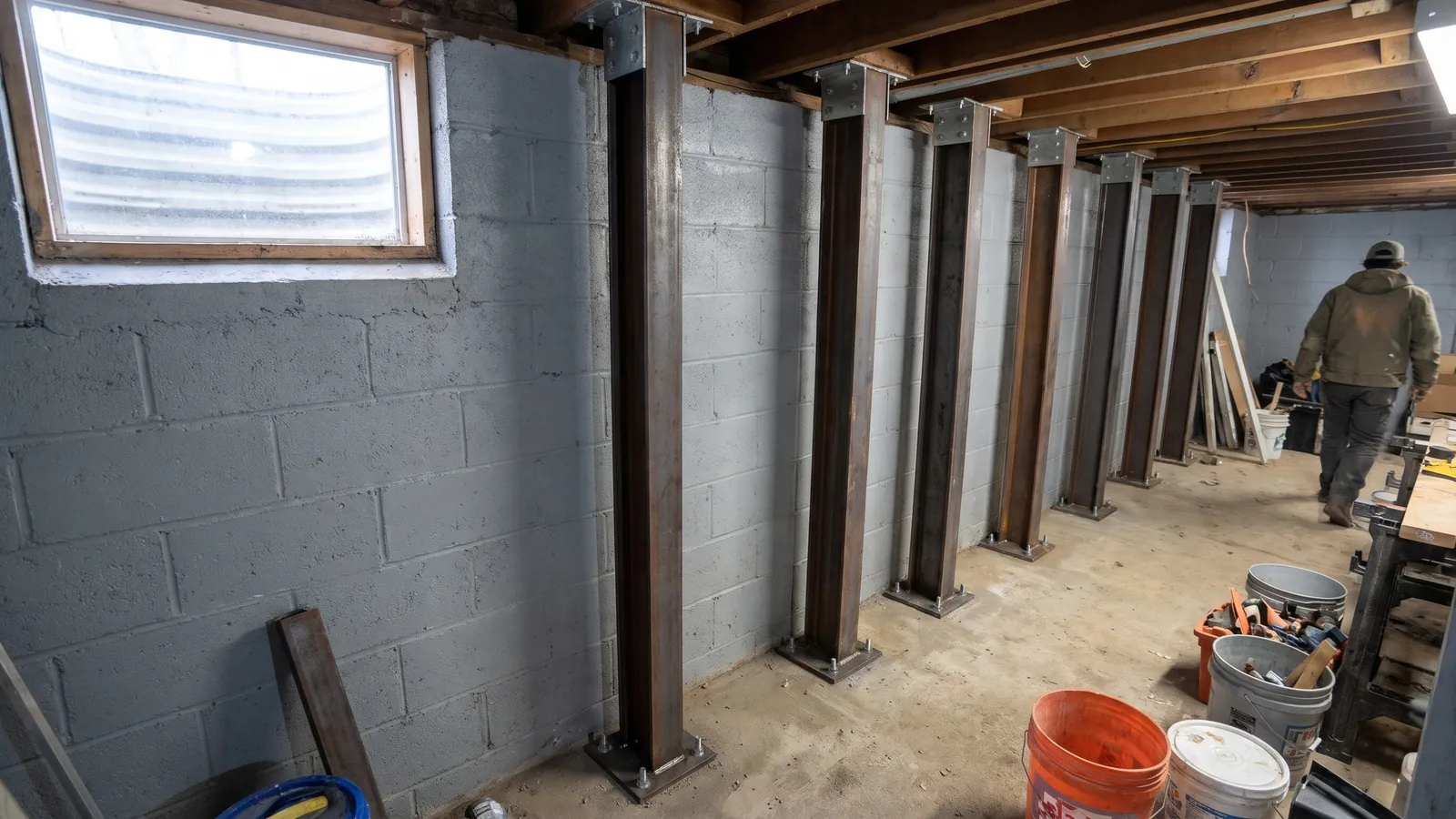
| Steel wall braces | Steel beams fixed to the floor and the joists, tightened over time | The wall leans more, or the yard outside cannot be dug |
| Wall anchors | Steel rods run out to plates buried in the yard, tightened from inside | There is yard space outside and the wall needs to be pulled back |
Walls that have moved too far, or slid at the base, may need part of the wall rebuilt. The inspection measures the lean at several points so that call is made with numbers.
Taking the pressure off
Holding the wall without dealing with water treats the symptom. Downspouts extended away from the house, the grade sloped so rain runs off rather than toward the wall, and in some basements an interior drain to relieve water at the footing: these are part of the plan, not extras.
Questions we hear about bowing wall repair
Is a bowing wall dangerous?
A wall that is still moving can eventually fail. If the lean changes from week to week, or the crack widens fast, call the same day and stay out from in front of it.
Can the wall be pushed back straight?
Wall anchors and braces can recover some of the lean over time as they are tightened, mostly in drier months. Straps hold the wall where it is.
Will the basement still be usable?
Yes. Straps sit almost flat to the wall and can be painted. Braces take a few inches of room. Anchor plates inside are about the size of a dinner plate.